Hello,
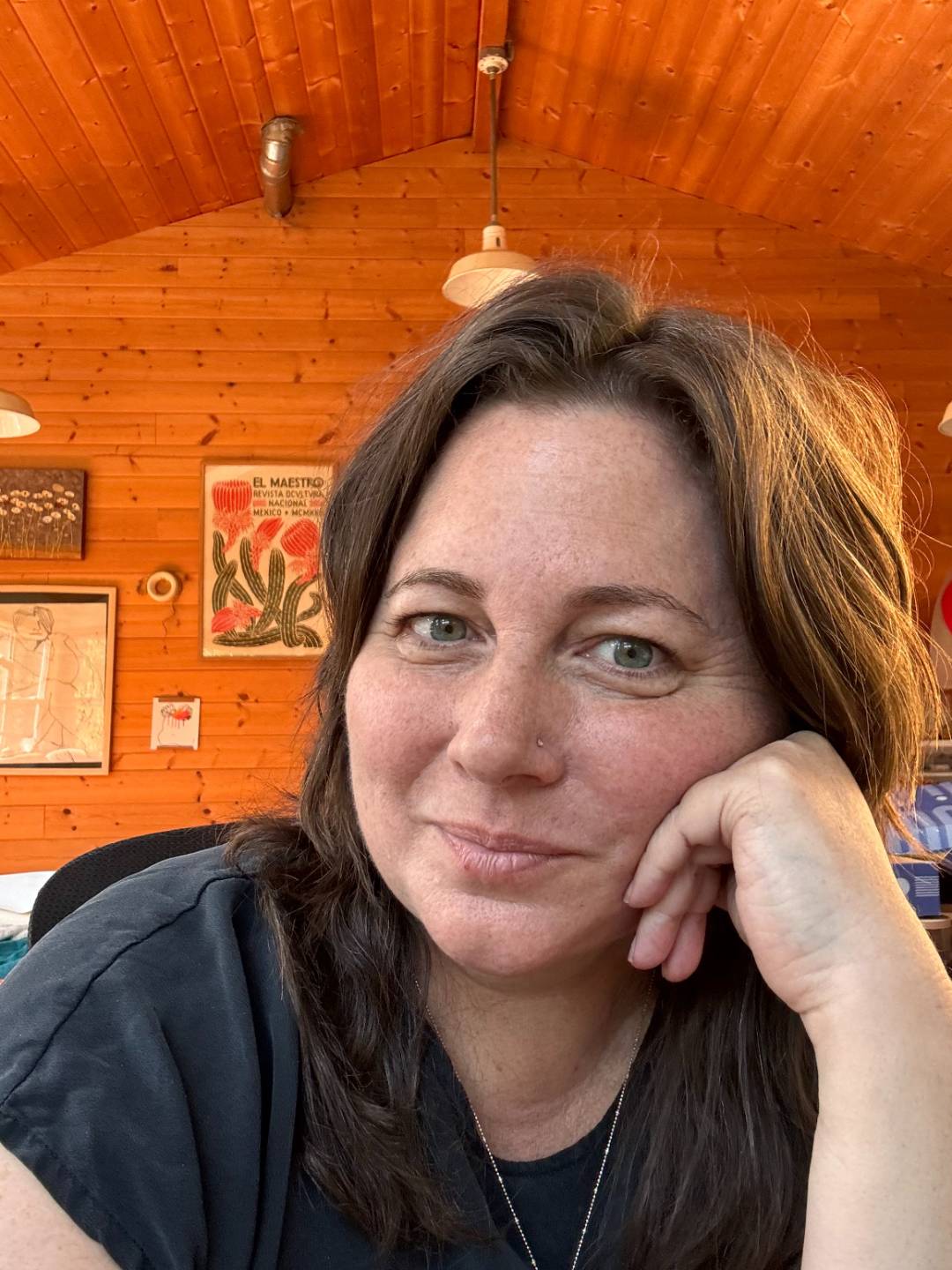
I’m Hilary.
Hilary Kinavey, MS, LPC
Co-founder of Center for Body Trust, therapist, writer, educator, and facilitator.
We can question what we’ve inherited.
I’ve spent much of my adult life questioning things I was once taught to accept.
That our bodies are problems to solve. That healing is something we accomplish through individual effort. That being a good helper means putting everyone else’s needs ahead of our own. That grief is something we should eventually get over.
The longer I do this work, the more interested I become in the assumptions underneath these ideas. Who benefits from them? What do they cost us? And what becomes possible when we stop organizing our lives around them?
I’m a therapist, writer, educator, and co-founder of Center for Body Trust. For more than 25 years, I’ve worked at the intersection of personal healing and cultural change. I co-created the Body Trust framework with Dana Sturtevant, and together we wrote Reclaiming Body Trust: A Path to Healing & Liberation.
What began as a challenge to conventional approaches to food, weight, and body image has grown into a much larger body of work about autonomy, relationships, power, and the possibility of living differently in our bodies.
And I’m still asking questions.
I BELIEVE that the ways we’ve learned to survive contain wisdom, even when those strategies no longer serve us. Healing isn’t simply about changing ourselves. It’s also about questioning the conditions that taught us to mistrust ourselves in the first place.
“What if the problem isn’t that we haven’t tried hard enough, but that we’ve been trying to thrive inside conditions that were never designed to support us?”
A few facts about me
A little about the person behind the work.
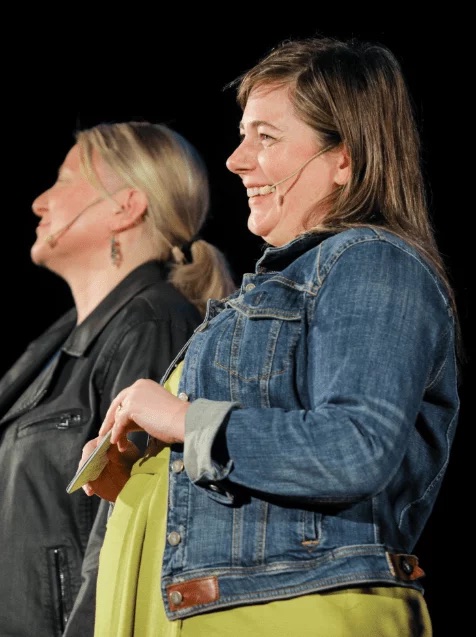
- I come from a big Irish and Italian American family, which probably explains my love of a long meal, a good story, and a spirited disagreement.
- I’m raising two teenagers, which means I regularly encounter people who are completely unimpressed by my professional expertise.
- I have more cookbooks than any reasonable person needs, and absolutely no plans to stop buying them.
- I love personal style. I can spend an unreasonable amount of time thinking about an outfit, and I consider that time well spent.
- I’m the person who asks, “But why do we do it that way?” at exactly the moment everyone else is ready to move on.
- I have approximately 47 ideas for things I’d like to create at any given moment. I’m learning that not all of them need to become projects.
- I’ve recently taken up painting. I’m terrible at it and utterly committed at the same time.
My story
I didn’t set out to create a framework or build an organization.
I became a therapist because I was interested in people, their stories, and the complicated ways we learn to survive.
Early in my career, I facilitated groups for people who had undergone weight loss surgery. I heard stories about shame, stigma, trauma, and the extraordinary lengths people had gone to in pursuit of a body that would finally be considered acceptable.
I also began to see how often the systems designed to help people were contributing to their suffering.
It changed the questions I was asking.
Instead of asking how to help people change their bodies, I became interested in what it might mean to change their relationship with their bodies. And what would need to change in our culture, healthcare systems, and professional practices to make that possible?
When Dana Sturtevant and I began working together in 2006, we shared a desire to create something different.
Over the next two decades, we developed Body Trust into a framework, a clinical approach, a professional training program, and a growing community of practitioners committed to challenging conventional thinking about bodies, health, and healing.
We wrote Reclaiming Body Trust: A Path to Healing & Liberation, created the Body Trust Certification program, and brought this work into therapy offices, healthcare organizations, classrooms, and communities.
I’m proud of what we’ve built. And I’m proud that Body Trust has continued to evolve.
One of the things I’ve learned from developing this work is that a framework should never become so fixed that it stops being curious. The questions change. Our understanding deepens. The world changes around us.
I want Body Trust to remain responsive to all of that.
What I’ve come to understand
One of the things that has changed most over the course of my career is how I understand the relationship between personal suffering and the world we live in.
I’ve sat with thousands of people who believed they were failing at something.
Failing to love their bodies. Failing to heal. Failing to cope. Failing to do enough.
And so often, when we look more closely, we find that what they’ve been calling a personal failure is connected to something much larger.
This doesn’t mean our individual lives and choices don’t matter. They do.
But I think we’ve become far too comfortable asking people to adapt to conditions that are hurting them.
I’m interested in what happens when we start asking different questions.
Not just How do I get better at this?
But Why is this so hard? Who decided it had to be this way? And what else might be possible?
Those questions have shaped my work with Body Trust, and they’re increasingly shaping my work with grief, organizations, and people in the helping professions.
What I’m working on now
I’m still deeply involved in developing, teaching, and expanding Body Trust. Alongside Dana Sturtevant and Sirius Bonner, I’m helping shape the next chapter of Center for Body Trust, including our professional training, organizational partnerships, and the ways this work continues to respond to the world around us.
I’m also following a few threads that have become increasingly important to me.
One is grief.
Through Tending, a collaboration with Carmen Cool, I facilitate groups, retreats, and trainings that invite people into a different relationship with loss. I’m especially interested in what it would mean for our organizations, healthcare systems, and communities to become more grief-responsive.
Grief isn’t something that happens only when someone dies. It accompanies change, identity, relationships, and the many ways our lives unfold differently than we imagined. Yet we live in a culture that often asks us to keep moving, remain productive, and carry our losses quietly.
I want to help create more room for grief, not as a problem to solve, but as an experience that deserves care, attention, and accompaniment.
Another is the business of care.
Through EMBER, I work with therapists, coaches, and other helpers who are trying to build meaningful livelihoods without losing themselves in the process.
So many of us entered the helping professions because we wanted to contribute something meaningful. Then we discovered that doing the work and building a business around it are two very different things.
I’m interested in the inherited assumptions about money, work, responsibility, and capacity that shape how we practice and what we believe is possible.
What would it look like to build businesses that reflect our values, account for our actual lives, and allow us to care for others without abandoning ourselves?
I see these as connected parts of the same work.
Whether we’re talking about bodies, grief, or how we make a living, I’m interested in what happens when we question the rules we’ve inherited and begin imagining something different.
And I feel like I’m just getting started.
There is always more to imagine.
I don’t think we have to accept things simply because they’ve always been done that way.
That’s a belief that has guided my work for decades. It’s what led me to co-create Body Trust, and it’s what continues to shape my work as a therapist, educator, writer, and facilitator.
I believe in the wisdom of lived experience, the importance of relationships, and our capacity to create something different together.
I’m glad you’re here.

Let’s Connect
Receive invitations to upcoming events and powerful tools for exploring your body story.